

A used water tank is only as good as the inspection behind it. That is what a used water tank inspection UAE buyers can trust should prove. Two tanks can look identical from the road — same size, same colour, same clean outside — and be completely different buys. One was checked inside and out, filled with water, and passed. The other was just washed and listed.
That is why “used tanks are risky” is the wrong way to put it. An uninspected tank is risky. An inspected one is a known quantity. So before you judge any used tank, it helps to know what a proper inspection looks like — what should happen to a tank between arriving at a seller’s yard and going on sale.
Step 1: What did it hold?
This is the first question, and it decides everything else. A tank that held clean drinking water is a different prospect from one that held anything else. If the answer is unclear — if nobody can say what was stored in it — the tank should not be sold for drinking water at all. That is the rule in our buying guide, and it is the first filter any honest seller applies: no history, no sale as a drinking-water tank.
Step 2: Shell and base
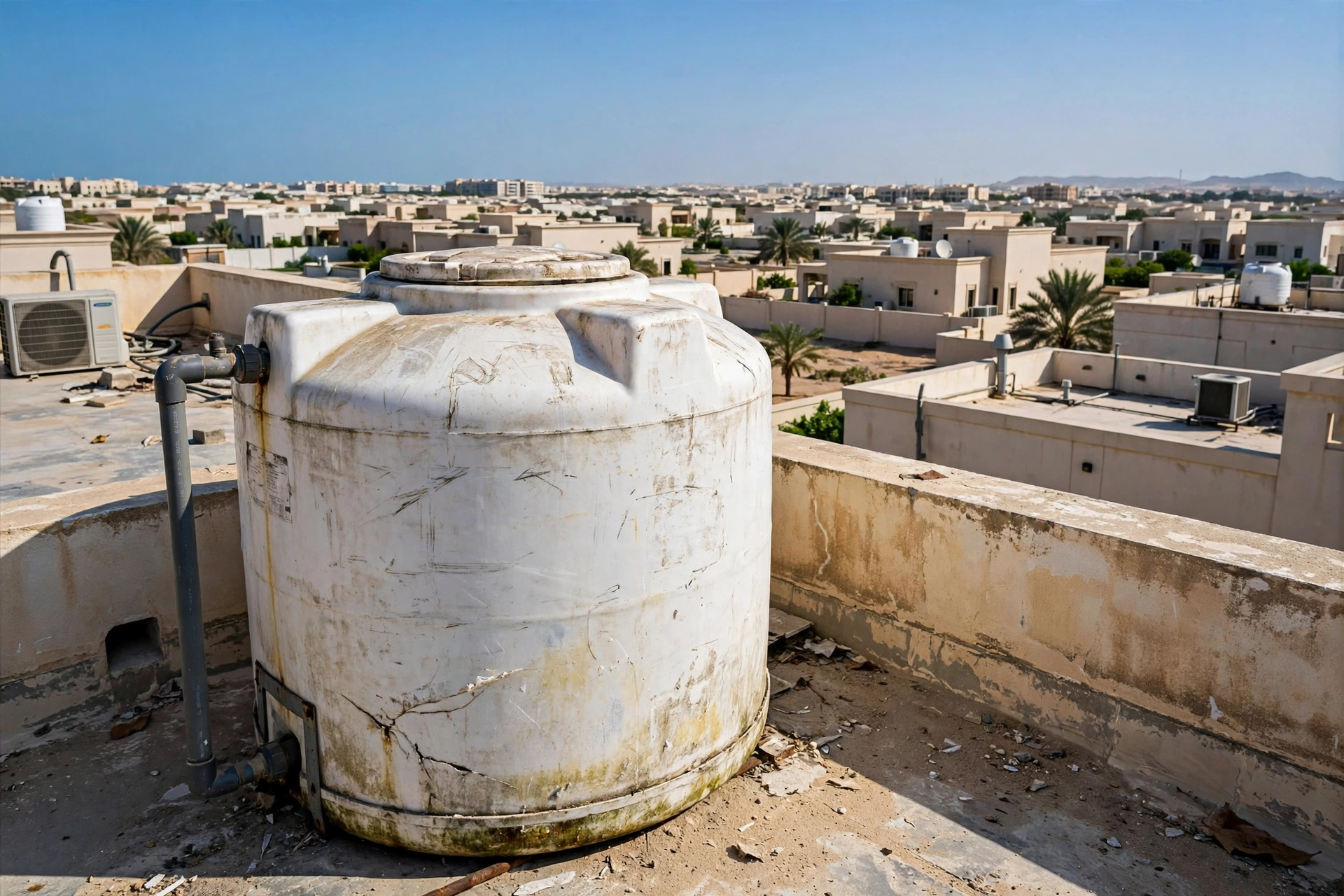
Next comes the shell. The inspector looks for cracks, especially around the base and the fittings, where stress concentrates. Sun damage matters in the UAE more than anywhere: a tank that spent years on an exposed rooftop can warp, bulge, or turn brittle, even if it still holds water. The tank should sit level without rocking, and the shell should feel firm, not soft. Surface marks and faded colour are cosmetic — a cracked base is not. A tank with a cracked shell, or one repaired with sealant to hide a crack, fails here.
Step 3: Lid and seal
A lid that does not seal is not a small defect. It lets in dust, insects and sunlight, and sunlight grows algae. The lid should sit flat, close firmly, and stay closed. A lid that rocks, gaps, or is missing altogether is a reason to reject the tank or replace the lid before sale — never a detail to leave for the buyer to discover.
Step 4: Every fitting, then the filled-water test
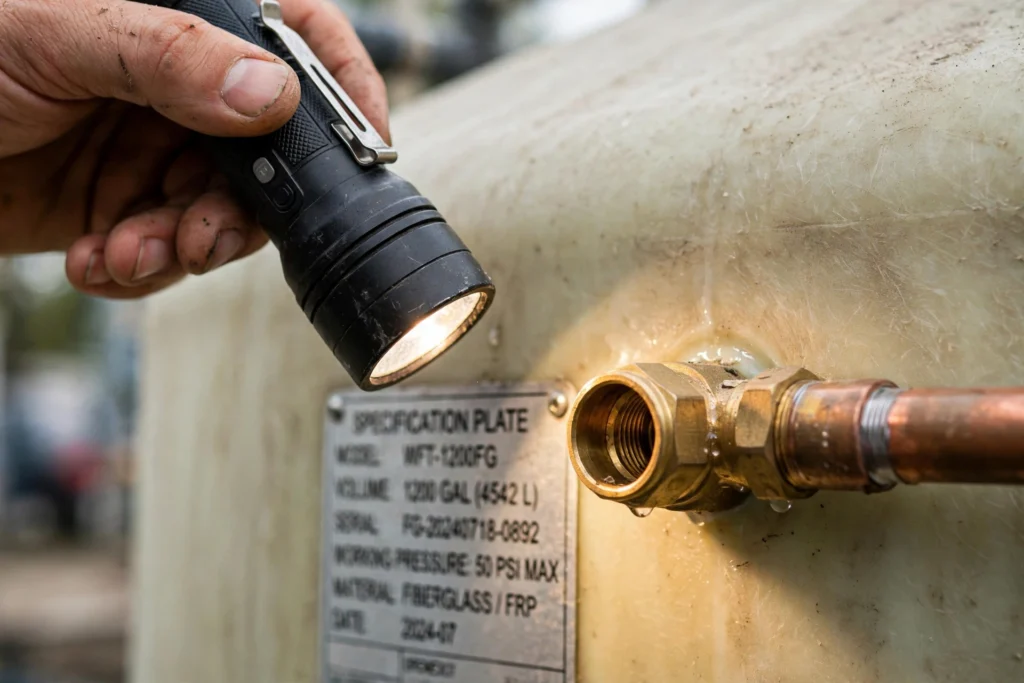
Inlet, outlet, overflow and drain are checked one by one: threads intact, no cracks, no cross-threading, no drips. Then the tank is filled and watched. A filled-water test is the check that catches what a dry look cannot — a slow drip at a joint, a fitting that only leaks under pressure, a base that flexes when the weight goes in. Any tank that cannot hold water without a drip does not go on sale as a working tank.
Step 5: Clean and disinfect before listing
A used tank should be cleaned before it is listed, not after it is sold. That means a thorough rinse, a scrub of the interior walls, a disinfectant wash made for drinking-water tanks, another rinse until no disinfectant smell remains, and time to dry. A tank with heavy algae that will not scrub off, or a chemical or fuel smell inside that will not wash out, does not get cleaned and sold — it gets rejected. Our buying guide says the same for buyers: never accept a tank that smells of chemicals.
What gets rejected
Not every used tank makes it to sale, and that is the point of the filter. The tanks that fail are the ones buyers should never meet: cracked shells, sealant-patched leaks, missing lids or broken fittings, tanks with an unknown or chemical past, and tanks with algae or smells that cleaning cannot remove. A seller who shows you only the tanks that passed is not hiding the rest — the rest were never for sale.
How to use this when you buy
You do not need to run the inspection yourself to benefit from it. Ask any seller these four questions, and judge them by the answers:
- What did this tank hold before, and can you show me inside it?
- Was it filled and checked at every fitting before listing?
- Can I see photos of the interior, the lid, and the fittings — not just the outside?
- What happens if I find a problem on delivery day?
A seller who answers plainly, shows the inside of the tank, and lets you inspect before paying is selling with confidence. A seller who rushes you, shows only outside photos, or will not let you look inside is asking you to take their word for it. Our used-vs-new guide puts it the same way: never buy a used tank you have not inspected — or had inspected by someone who knows tanks.
Delivery day: the last check
Even a tank that passed every yard check deserves one last look when it arrives. Set it on a flat, level base, fill it slowly, and watch every fitting while it fills. Only put it into service once the water runs clear with no unusual smell. Our moving and setting-up guide walks through the transport, base and first fill step by step.
Sizes
Common used sizes run from 200 to 10,000 gallons — vertical plastic tanks for everyday villa and farm storage, and GRP fibreglass tanks for larger needs. The right size is the one that fits your site and your job; a used tank in the wrong size or the wrong material is not a bargain at any saving. If you are choosing between GRP and plastic, our comparison of used plastic and used fibreglass tanks covers which second-hand material ages better.
Frequently Asked Questions
What should a used water tank inspection cover in the UAE?
What the tank held, the shell and base for cracks and sun damage, the lid seal, every fitting, a filled-water test, and a clean and disinfect before sale.
Is a used water tank safe for drinking water?
Yes, if its history is fully known, it held only clean drinking water, it passes a full interior and fittings inspection, and it is cleaned and disinfected before use. If any of that is uncertain, use it for non-drinking purposes or buy new.
Why do some used tanks get rejected before sale?
Cracked shells, sealant-patched leaks, missing lids or broken fittings, an unknown or chemical past, and algae or smells that cleaning cannot remove.
What photos should a used tank listing show?
The interior, the lid and seal, every fitting, and the base — not just a clean outside shot. If a listing shows only the outside, ask for the rest before paying.
What should I check on delivery day?
A flat, level base, a slow first fill, every fitting watched for drips, and water that runs clear with no unusual smell before the tank goes into service.