

Intro
A used water tank can be a sensible buy — or a costly mistake. The difference is rarely the tank itself. It is whether the tank matches the job it is being bought for.
In the UAE, second-hand tanks are common on construction sites, farms, labour accommodations, and villas where a backup tank is needed quickly. Many of them have years of good service left. Others are being sold precisely because they are past their best. This guide gives you a simple way to decide: when a second-hand tank makes sense, when a new tank is the smarter choice, and the checks that settle the question either way.
What “Used” Actually Means
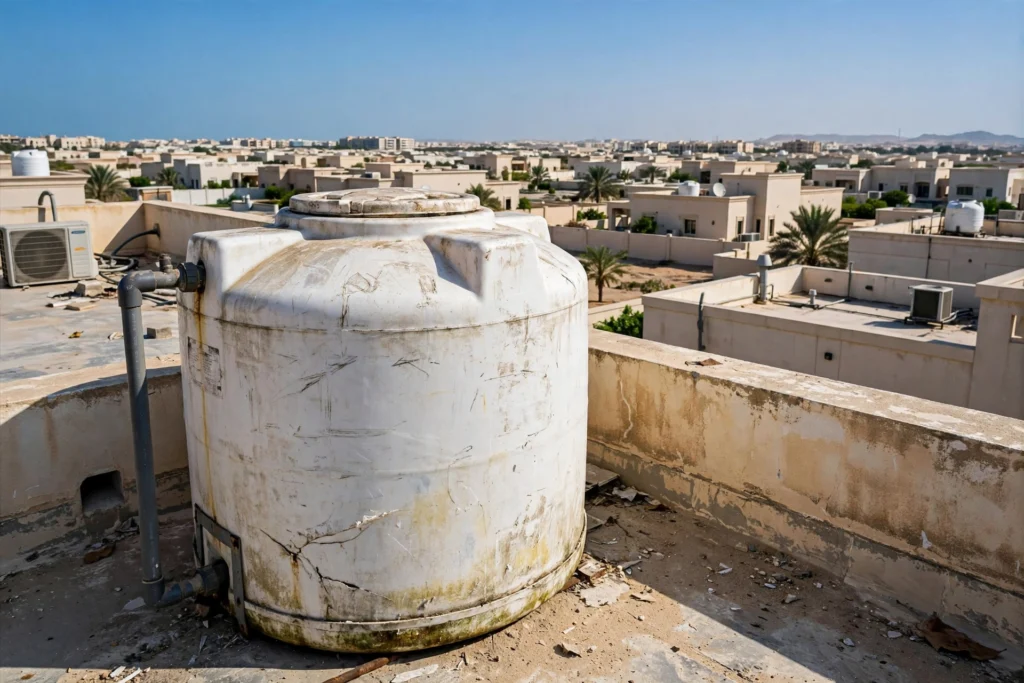
Not all used tanks are the same. A tank that was installed, filled, drained, and removed carefully is very different from a tank that sat cracked in the sun, was dragged across a site, or spent years holding something it was never meant to hold.
Before you compare used against new, ask three questions about the used tank in front of you:
- What did it hold? A tank that held clean potable water is a different prospect from one that held anything else. If the answer is unclear, walk away.
- Why is it being sold? A site closing down or a villa upgrading to a larger tank are ordinary reasons. A tank sold because it leaked, smelled, or failed an inspection is not a bargain.
- Can you inspect it? A seller who lets you look inside, check the fittings, and see the tank full of water is selling with confidence. A seller who rushes you, or will only show photos, is asking you to take their word for it.
If any of those three answers is unclear, treat the tank as a risk, not a deal — however good it looks from the outside.
When a Used Tank Makes Sense
A second-hand tank is often the right choice in these situations:
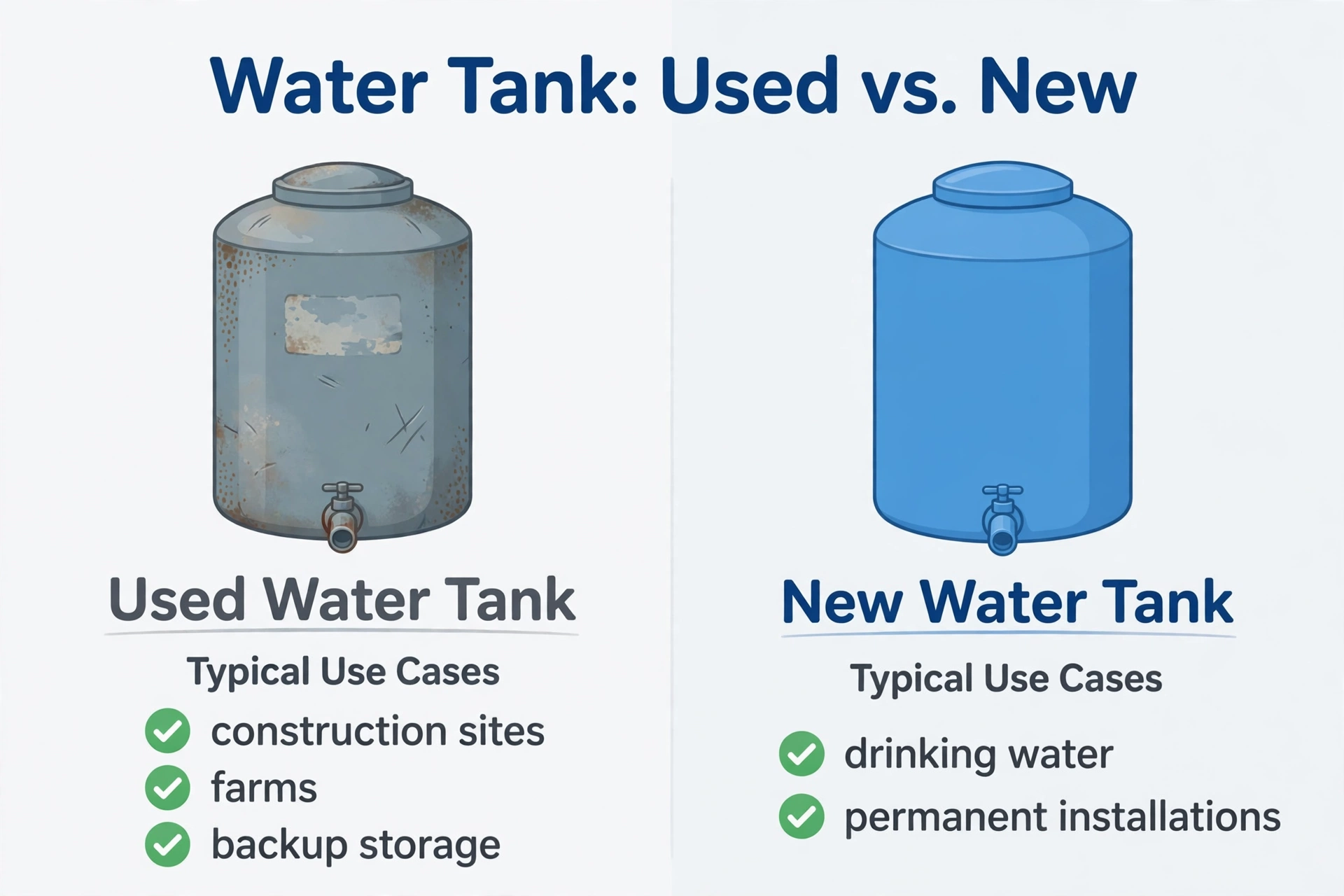
1. A temporary or short-term site. A construction site, a short project, or a labour accommodation that will move within a year or two does not need a tank bought for decades of service. A sound used tank does the job for the life of the project.
2. Non-drinking water uses. Garden irrigation, wash-down water, dust control, and other non-potable uses are forgiving. A tank with cosmetic wear — faded colour, surface marks — can serve these jobs well, as long as its shell and fittings are sound.
3. A backup or second tank. If your main tank already supplies drinking water and you need extra storage for emergencies or peak demand, a used tank as a second store can be a practical addition, provided it is cleaned and disinfected before use.
4. You can inspect it properly — and it passes. A used tank that you have seen inside and out, filled, and checked at every fitting is a known quantity. The inspection, not the asking description, is what makes it a good buy.
5. The size and material fit the job. A used GRP fiberglass tank and a used PVC tank are not interchangeable. Match the material to the use: fiberglass for toughness and long service, PVC for lighter everyday storage. If the used tank on offer is the wrong material or the wrong size for your site, it is not a good buy at any saving.
When a New Tank Is the Smarter Choice
There are jobs where a new tank is simply the safer, simpler decision:
1. Drinking water for your home. If the tank will supply your family’s drinking water every day for years, a new tank removes the biggest unknowns: what it held before, how it was treated, and how much life its shell has left. For a villa’s main potable supply, new is the default, not the luxury.
2. A permanent installation. A tank going onto a roof, into a plant room, or underground is expensive to remove and replace. If reaching the tank again will be difficult, buying new avoids paying twice — once for the tank, once for the replacement job.
3. No history, no inspection. If you cannot see the tank, cannot learn what it held, or cannot check it full of water, you are not buying a tank — you are buying a story. A new tank with a known specification beats an unknown used tank every time.
4. The used tank needs major repair. A cracked shell, a warped opening that will not seal, or fittings that all need replacing are not small fixes. If the used tank needs real work before it can hold water safely, the saving has usually already disappeared.
Used vs New: A Quick Comparison
| Question | Used tank | New tank |
|---|---|---|
| Best for | Temporary sites, non-potable uses, backup storage | Drinking water, permanent installs, long-term service |
| What you must check | Full history, interior, fittings, filled-water test | Size, material, placement, and installation |
| Biggest risk | Unknown past use or hidden damage | Choosing the wrong size or material for the job |
| Biggest advantage | Ready availability for short-term needs | Known condition and a fresh start |
| When to walk away | History unclear, inspection refused, damage found | — |
The table is not a scorecard where one side always wins. It is a reminder that the right choice depends on the job. A used tank for a farm wash-down and a new tank for a villa’s drinking supply can both be the correct decision, on the same day, for different buyers.
The Checks That Decide It
Whatever you decide, run these checks on any used tank before it is delivered:
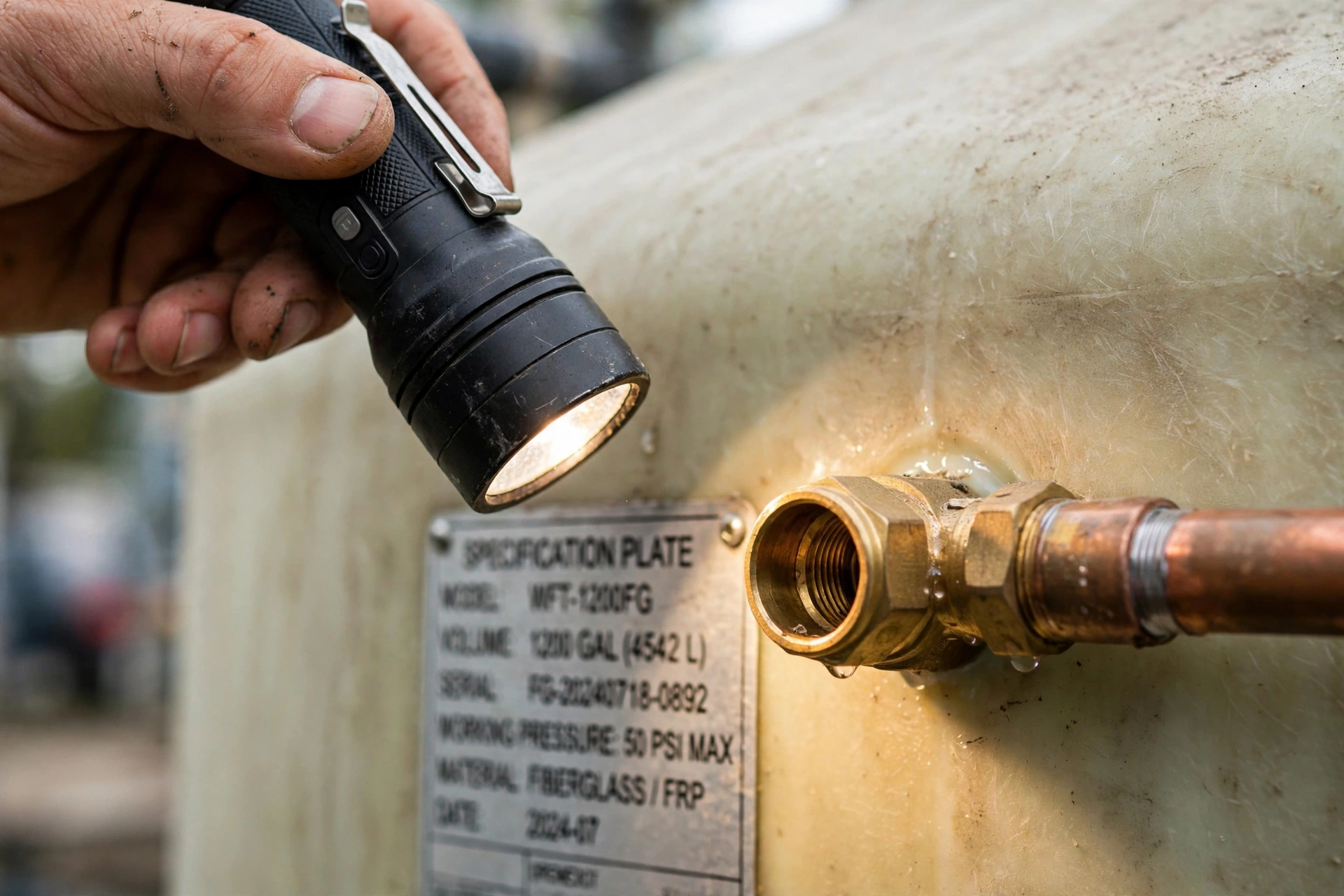
- Look inside. The interior should be smooth, clean, and free of cracks, heavy staining, or a smell that will not wash out. A torch and a careful look tell you more than any photo.
- Check the lid and seal. The lid should sit flat, close firmly, and keep out dust, insects, and sunlight. A lid that rocks or gaps is a reason to walk away, not a detail to fix later.
- Test every fitting. Inlet, outlet, overflow, and drain should be intact, not cracked or cross-threaded. Ask to see the tank filled, and watch every joint for drips.
- Check the base and shell. The tank should sit level without rocking, and the shell should feel firm, not soft or brittle. Look for repairs: a patched tank is not automatically a bad tank, but you should know what was patched and why.
- Confirm the material. Make sure the tank is the material you think it is — GRP fiberglass and PVC look similar at a glance but behave differently over years of UAE heat. A full inspection guide is in our used-tank buying guide.
For the full step-by-step inspection, see our guide to buying used tanks safely in the UAE.
The One Mistake to Avoid
The most common mistake with used tanks is buying on appearance and size alone. A tank that looks clean from the outside and is the right size can still have a damaged interior, a lid that will not seal, or a past use that makes it unsuitable for drinking water.
Never buy a used tank you have not inspected — or have not had inspected by someone who knows tanks. A short inspection costs an afternoon. A bad tank costs a replacement, a re-installation, and, in the worst case, water you cannot trust.
FAQs
Is a used water tank safe for drinking water?
It can be, if its history is fully known, it held only clean potable water, it passes a full interior and fittings inspection, and it is cleaned and disinfected before use. If any of that is uncertain, use it for non-drinking purposes or buy new.
How do I know if a used tank is too old?
Age alone is not the test — condition is. A well-kept fiberglass tank can outlast a poorly kept one half its age. Judge by the interior, the lid seal, the fittings, and whether it holds water without a drip, not by the year it was made.
Should I buy a used GRP tank or a used PVC tank?
Match the material to the job, not to the listing. GRP fiberglass suits tougher, longer-term service and larger installs; PVC suits lighter everyday storage. Read our GRP vs plastic comparison before deciding.
Can a used tank be moved and installed like a new one?
Yes — with care. Drain it fully, cap every opening, move it in its designed position, set it on a flat level base, and flush it before the first fill. Our guide to moving and setting up a used tank covers each step.
What should I do after buying a used tank?
Clean it, disinfect it with a food-safe product made for drinking-water tanks, rinse until no disinfectant smell remains, then fill it slowly and check every fitting while it fills. Only put it into service once the water runs clear with no unusual smell.
Bottom Line
A used tank makes sense when the job is short-term, the water is not for drinking, or you can inspect the tank properly and it passes every check. A new tank makes sense when the water is for your family’s daily drinking, the installation is permanent, or the used tank’s history is unclear.
The question is never just “used or new?” It is “used or new — for this job, on this site, with this tank’s history?” Answer that, and the choice usually makes itself.
Browse the used water tank range, or talk to us on WhatsApp if you want help matching a tank to your site.